Sunday, October 27, 2013

Shrooming in London

Recently, I try to get out into the gardens as often as possible. Especially now that it is autumn, the rains have been through, and it is rather warm. The conditions for fungi forays (searching for mushrooms) are perfect! Can you help me identify these? Here are some mushrooms I found around Kew Gardens:

Agaricus sp. (these are related to the button mushrooms you buy in the grocery store!)
Agaricus sp.
Clitocybe inversa
Clitocybe inversa

Clitocybe inversa
Clitocybe inversa
Very nice mushroom with red/orange cap fringed with white feathery scales. Abundant in the area, found growing on mulch. Dark spore print, white fibrous stem without annulus/ring.
same as above
Unknown, very cute small white mushroom cluster on grass
Beautiful blue/green Hygrocybe spp. growing on the leaves beneath a beech tree (Fagus sylvatica).
Same as above. Note white, fibrous stem without ring.
Same as above. Note white/cream spores, adnate gills (gills attached to stem).

A mini forest of unknown little brown mushrooms growing on the mulch beneath Yew trees (Taxus baccata) and pines at Kew Gardens.
Clitocybe sp.
Unknown mushroom. Looks like a mini Ink cap mushroom (Coprinus sp.), but I did not check the gills for ink. It was tiny!!
Agaricus sp. fairy ring
Agaricus sp. Note the annulus/ring around the stem and the dark gills.
Lepiota sp.
And of course, you know I can't resist photographing some wildflowers along the way too.


Cornflower (Centaurea cyanus)
Update: This was a fun find - I just learned that the Cornflower is an endangered species and a UK Biodiversity Action Plan priority species! Wow! Check out more information about it's status. Apparently, this is not so much because of it's distribution (which is quite widespread), but because it is important to the protection of arable lands and therefore, biodiversity.

Sunday, October 20, 2013

Have you read anything good lately?

I just read about a study in the New Scientist in which a scientist has discovered that people who read fiction books are nicer people! According to the article:
"Our ability to detect and understand other peoples' emotions, and to infer their beliefs and intentions is known as theory of mind. David Comer Kidd and Emanuele Castano at the New School for Social Research in New York tested whether exposure to literary fiction – stories with more complex characters – boosts this."
The outcome showed that:
"Those who had read the literary fiction showed a heightened ability to empathise compared with the other groups."
I've recently started reading again before going to bed. The Englishman has convinced me that looking at a bright LED screen (i.e. my computer) before going to bed is not healthy. So, instead, I've been reading, which actually really works. I end up starting to doze and once the paragraph starts to get fuzzy, I know it's time for bed. And big bonus, I'm loving it! Having read so much nonfiction/scientific literature while earning my master's degree, I stopped reading anything else. Turns out I've been missing it. There's nothing that can beat the ability to escape into a good book, live out some fantasies, and connect to fictional characters. Perhaps I am even becoming a nicer person because of my reading increase.

I am currently reading The Coral Thief by Rebecca Stott

And before that I read The Hundred Year Old Man who Climbed out of a window and disappeared by Jonas Jonasson, upon my mother's recommendation and really enjoyed it:
What are you reading right now?

Tuesday, August 27, 2013

Brooklyn Botanic Garden prunes it's science department

Every research/science institute dreads funding cuts as big programs can be affected. Or in the case of the Brooklyn Botanic Garden, the entire science department can be shut down! Apparently, this was a result of a combination of building issues (a subsiding foundation) and "increased insurance and employee-benefits expenses." What a loss for the scientific community as well as the garden.

Tuesday, August 13, 2013

A map of plant families

Check this out! The GIS department at the Royal Botanic Gardens, Kew in London has made an interactive map that will tell you the number and percentage of plant families and generas that occur in different parts of the world!

Did you know that Northern Europe (Denmark, Finland, The Faroe Islands, Great Britain, Iceland, Ireland, Norway, Svalbard and Sweden) have 596 plant genera and 111 plant families.

It is ranked 40th in the world for genera and 44th for families.


And did you know that the Southeastern US (which oddly, Maryland is lumped into) has 1064 genera and 202 families, it is ranked 25th in the world for genera and 22nd for families.


Go have a play, you might find it interesting too!

Monday, July 29, 2013

Let's Eat Tearthumb!

Since Kew Gardens has based this year's summer festival on edible plants, aptly named IncrEDIBLES, and because I love edible botany, I've been thinking some more about which plants we could eat. Although most of the time ecologists want to protect plants and increase biodiversity, there is one particular time when most ecologists will agree, the plants must be destroyed, eradicated, extirpated from an area. I know this sounds harsh, but I'm talking about invasive exotic species. These are pest species which have come from other habitats, often other countries, and they love their new habitat so much that they out-compete local native plants. Such invasive species can eliminate local endemic species, reduce the number of once common plants, disrupt the ecosystem and all the ecosystem services that it once provided, and be a real headache for habitat managers and gardeners alike.

Today, I came across a new book that has just been published in my home area of Maryland called A Quick Guide to Wild Edible Plants: Easy to Pick, Easy to Prepare. One of the wild edibles mentioned in the book is tearthumb or mile-a-minute weed (Polygonum perfoliatum), a nasty invasive plant that plagues our home in Maryland by climbing over plants, smothering my mother's wonderful garden, and becoming larger and more problematic every year. So I am delighted to find out that it's berries are edible!!

According to the US Forest Service, Mile-a-Minute weed is edible by humans and has a high potassium content. Does this mean we could skip imported tropical bananas and eat seeds from the garden instead!? And, based on the following excerpt from a journal article written about Mile-a-Minute weed, it is not only edible, but it is also use in Asia as an herbal medicine and could even be used as an anticancer agent! I wonder, if we started eating the seeds if it would cause even a small dent in the speed this invasive is taking over?
CURRENT AND POTENTIAL USES
In its native eastern Asia, mile-a-minute is considered beneficial and has been used as an herbal medicine for over 300 yr (He et al. 1984; Hoque et al. 1989; Sook and Myung 1992; Yang and Kim 1993; Zhu 1989), or as an edible wild fruit (Bajracharya 1980). The plant also serves as a suitable food source for a diverse group of mammals, birds, and insects. Two protein kinase C inhibitors (PKC), vanicosides A and B; five diferuloyl esters of sucrose; and feruloylsucroses have been isolated from mile-a-minute plants (Sun 1999; Sun et al. 2000). PKC are involved in cell signal transduction and cell proliferation and are believed to be tumor promoters; thus PKC inhibitors could be used as potential anticancer agents (Sun 1999). Two well-known natural products, quercetin and beta-sitosterol, have also been isolated from mile-a-minute (Sun 1999). Beta-sitosterol is also reported to have anticarcinogenic properties (Park et al. 2003). The bioflavonoid quercetin has antioxidant (Boadi et al. 2003; Kumar et al. 2003; Pietruck et al. 2003), antiproliferative, and anti-inflammatory properties (Pietruck et al. 2003).
Kumar, V., & Ditommaso, A . (2005). Mile-a-Minute (Polygonum perfoliatum): an increasingly problematic invasive species. Weed Technology 19(4), 1071-1077.


Scientists and others have been eating strange things for centuries!

Photograph of the 'hen and chickens' pineapple, sent to Kew in a letter from Leonard Wray Jr., from Malaysia 1892 [archive ref: DC 165/275]
Look guys, it's not just me that has this strange fascination with discovering edible plants. A special group at Kew Royal Botanic Gardens is working to digitize (scan/photograph and summarize) letters sent to and from the Director at Kew all the way back to the 1840s. Because Kew Gardens have long been considered one of the leading research and collections hubs for plants and other things of botanical interest, scientists and botanists have been sending their findings, interesting anecdotes, and even samples or specimens to the gardens ever since the first official director, Sir William Jackson Hooker, was appointed in 1841.

Come see this Kew blog posting about edible plants that have been referred to in the Director's Correspondence.

Friday, July 26, 2013

Eating Wild Foods while Hiking


If you know me, you know that I like to eat things that I found out in nature. I find it a really fun way to interact with nature and the flavors you find in the wild are often evoke your taste buds in a very unfamiliar and delightful way. This "habit" of mine has led me into trouble - like the time I ate a Prickly Pear cactus fruit with my bare hands, or the time I gulped down a leaf of water lettuce (Pistia stratiotes) before our guide in Palo Verde National Park in Costa Rica warned me of the tiny calcium oxalate needle-like crystals that cover it's leaves and burned my throat for hours, or the time I most recently ate a fresh cherry off a tree just to be reminded that it was growing on a polluted brown field. But despite all of my misguided tastings, there have been quite a few really amazing dishes that have come out of my wild foraging tendencies. I've foraged for over 5 kilos of wild mushrooms in the forests of Davos, Switzerland (I was not on the linked excursion, rather, I was hobby foraging with some friends). I have discovered snacks while passing barberry bushes in Switzerland, sea grapes in Florida, bilberries in the Swiss Alps, wineberries back home in Maryland, and many more things as I've roamed through natural areas.

Outside Magazine recently published an article on the top 8 Hikes You Can Eat. I love this idea! I would definitely travel simply to hike and eat things from the wild along the way! It's kind of like a survival-foodie trip. Would you do it?


Tuesday, July 23, 2013

Coastal dunes and coastal ecosystems can save your home

Surely, after Hurricane Katrina and Superstorm Sandy, we all know the risks of building a home on the coast. But still, people want to live near water and coastal developments are booming. NOAA calculated that 39% of the US population lives on or near the shoreline. No wonder the Midwest is so sparsely populated! So how can we protect people's homes that live right on the shoreline when they have obviously built in an area subject to high risk? There is a natural solution. It has long been recognized that when a natural buffer is left between the home and the water sources, the home is less likely to be damaged heavily. That means, at the beach, we should leave natural, vegetated dune systems, trees, wide beaches, wetlands, and back-bays in a natural state. When a storm does come ashore, these natural systems can absorb the damage caused by wind, water, and energy much better than your home can. Plus, these ecosystems are typically naturally resistant or resilient to damage.

Wednesday, June 26, 2013

Upcycling climbing rope


Have you heard of upcycling? It's the process of turning waste materials into something of better quality. Basically, instead of throwing away or putting something into the recycling bin, upcycling is a fancy word for reusing something that is otherwise useless. Do you do this?

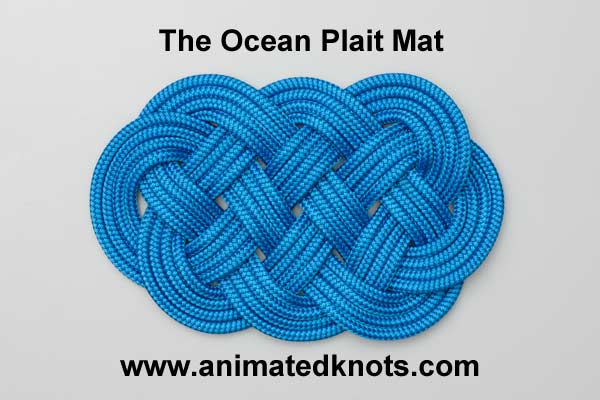
The Englishman* is a climber and even though I got into climbing before him, he really got me to enjoy the sport and push myself to get better. Recently, he decided that for safety reasons, it is high time to buy some new climbing ropes. Great! But what do we do with the old ones? He's got over 10 years of blood, sweat, mud, rock and a bit of groaning soaked into these ropes. The memories are too precious to let go of. The ropes are actually still in great condition, they just are not deemed safe enough to hold a falling climber anymore. Here's what we decided to do with at least one of them:


The instructions for making this rug are super simple with the illustrations shown by Animated Knots by Grog. And I love that this still captures the essence of climbing (and it reminds me of knots in sailing too!!). It's the perfect doormat!

If you want to find more fun things that you can upcycle check out UpcycleThat, this upcycling pinterest board, and this from TwistedSifter. Do you have any other ideas?

*The Englishman - I'm trying out nicknames for my wonderful boyfriend. But for privacy purposes, I don't want to share his name online. After a terrible stalking incident a couple years ago, I am much more protective of my personal information and that of those around me. I hope you can all respect that.

Friday, June 21, 2013

Naked mole rats do not get cancer!


Naked mole rats (Heterocephalus glaber) has suddenly become very interesting! Mole rats bodies contain a substance called Hyaluronan, which acts as a lubricant for soft tissues. Humans apparently also have this polysaccharide, but it is composed differently and present in the human body in much smaller concentrations. Doctors already use human Hyaluronan for arthritis, chronic knee problems, and eye surgery. The most exciting new discovery is that naked mole rats do not seem to get cancer and Hyaluronan is credited with preventing it! Wouldn't it be great if we could find out a way to prevent or treat cancer with this substance? (but please don't harvest naked mole rats to do it!)

Here are some quick facts about mole rats:

The naked mole rat is found in arid areas of East Africa. They live in colonies with complex family structures.
Size relative to a tea cup:
Illustration: Mole rat compared with tea cup
Here is more information about naked mole rats.